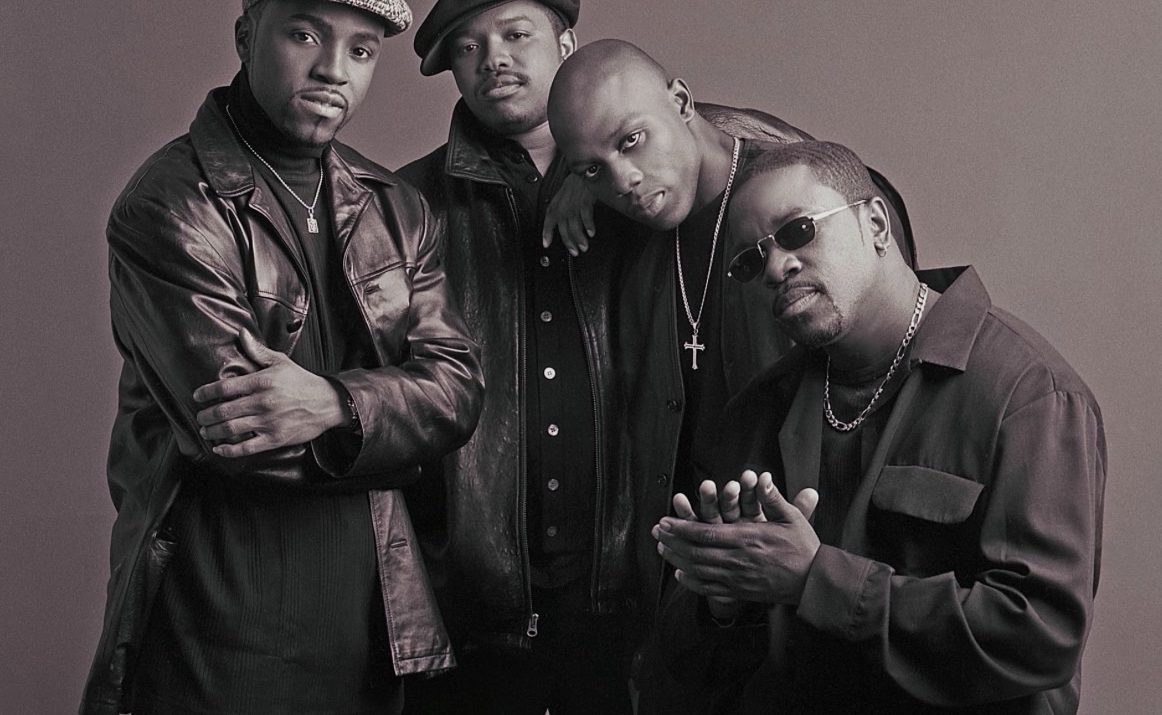
Teddy Riley has long been credited as an architect of New Jack Swing, but during a candid conversation on the My Expert Opinion podcast, the producer shifted focus from innovation to internal conflict — specifically, what he says derailed Blackstreet at the height of its success.
Asked about the recurring tensions that seem to surface in successful groups, Riley answered plainly: “Somebody’s greedy. Period.”
According to Riley, the financial structure he created for Blackstreet and Guy was intentionally generous — and uncommon in the industry at the time. “If I’m giving you more than the industry standard — and that was happening — everybody know they made more than the industry standard,” he said. “Nobody gets each $50 to $100,000 just for signing a deal when you ain’t worth it.”
Riley said he negotiated lucrative advances and favorable terms because he didn’t want his artists financially struggling while he prospered. “I made the biggest deal for Blackstreet and Guy,” he explained. “I didn’t have to do that. I could have did what Diddy and everybody did.”
Without elaborating in detail, Riley referenced an old industry mentality he rejected — one summarized by the phrase: “Keep them broke, they always come back.” He was clear that wasn’t his philosophy.
“That’s not me,” Riley said. “I don’t want to be riding in my Ferrari and you riding in the Pinto. None of them could ever say that when they got with me.”
But generosity, he suggested, did not guarantee loyalty.
“The purpose of this breaking up was because of greed,” Riley said, pointing to disagreements over touring pay — particularly around singer Dave Hollister. Riley recalled supporting a request that Hollister be paid equally or at least substantially during a tour run. Another member, he said, objected.
“He’s like, ‘You ain’t taking food out of my kid’s mouth,’” Riley recounted. “And I was like, ‘Dude, you haven’t made a hit on the albums.’”
Riley went on to list the group’s vocal contributors, arguing that credit and compensation should reflect creative output. The disagreement, he said, exposed deeper fractures about value and entitlement within the group.
Beyond performance splits, Riley also addressed publishing and ownership — particularly surrounding “No Diggity,” Blackstreet’s Grammy-winning hit. He said he now controls his publishing and trademark rights tied to the record, describing past publishing concessions as overly generous.
“I think the dumbest thing I did was give these [expletive] publishing,” he said, before quickly reframing the comment. “But it ain’t dumb no more.”
Riley emphasized that he has not blocked former members from performing the record but acknowledged he retains leverage. “I own my publishing now. I make the decisions on where my songs go,” he said. “He got 3%. He can’t eat if I don’t.”
Even with that power, Riley suggested restraint has defined his approach. “I’ve taken the high road for so many years,” he said, though he admitted there are moments he considers enforcing his rights more aggressively.
Ultimately, Riley said the breakdown with Blackstreet — and previously with Guy — stemmed from a lack of gratitude and alignment rather than mismanagement. “You can’t roll with people who’s ungrateful,” he said. “You can’t roll with people that’s working behind you.”
Now in his 50s, Riley framed the conversation as one about longevity and control. He spoke about ownership, health and remaining relevant in rooms that still generate opportunity. For him, the lesson is less about chart success and more about structure. “If I’m going to stay in this business,” Riley said, “I can still get the checks.”
For Riley, that sustainability begins with ownership — and ends when greed outweighs loyalty.