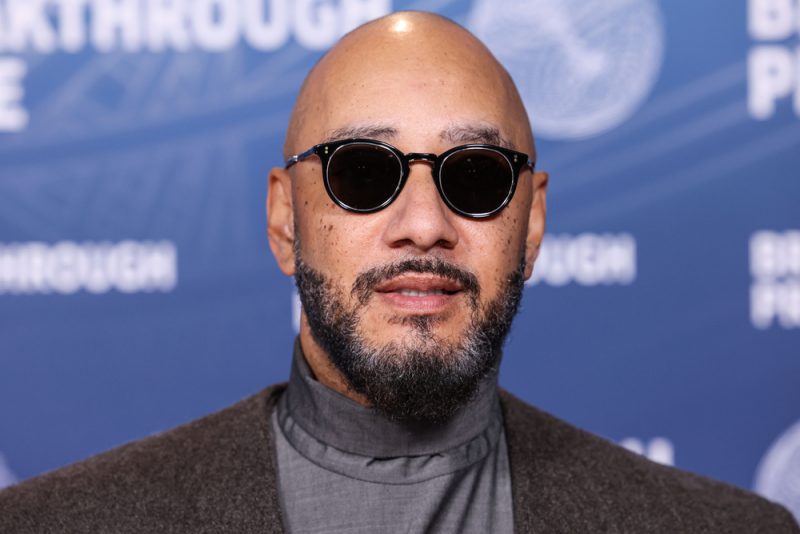
Swizz Beatz has never needed much to make a beat sound enormous. A cheap-sounding keyboard, drums that feel slightly too loud, a strange loop and enough empty space for a rapper to lose their mind can be more effective in his hands than an arrangement twice as complicated.
Born Kasseem Dean on Sept. 13, 1978, Swizz emerged alongside the Ruff Ryders in the late 1990s and developed one of hip-hop’s most immediately recognizable production styles. These aren’t necessarily his 10 “best” beats. They’re 10 records that trace how that sound grew, travelled and survived.
1. DMX — “Ruff Ryders’ Anthem”
If you had to explain Swizz Beatz with one record, this is probably it. “Ruff Ryders’ Anthem” is almost absurdly simple: stabbing synths, marching drums and acres of space for DMX. That simplicity became a strength. The beat helped establish both the Ruff Ryders aesthetic and Swizz as a producer whose records sounded unlike almost anything else on rap radio in 1998.
2. JAY-Z feat. DMX — “Money, Cash, Hoes”
The keyboard line sounds almost like someone discovering the preset while the tape is already rolling. That is precisely why it works. Swizz takes something abrasive and repetitive and turns it into the engine for two of New York’s biggest rappers. It’s early Swizz at his most fearless: minimal, synthetic and unconcerned with sounding polished.
3. DMX — “Party Up (Up in Here)”
By 2000, the formula had become undeniable. “Party Up” keeps Swizz’s trademark bounce and keyboard-driven attack but scales it into something capable of filling arenas, clubs and sports stadiums. More than 25 years later, those opening seconds still trigger an immediate reaction.
4. JAY-Z — “Jigga My Nigga”
Swizz’s work with JAY-Z proved his sound wasn’t confined to DMX or the Ruff Ryders. “Jigga My Nigga” has the same blunt-force rhythm, but JAY-Z rides it differently, turning the beat into something playful and boastful. It helped demonstrate how adaptable Swizz’s supposedly rigid production style actually was.
5. The LOX — “Wild Out”
“Wild Out” captures the nastier side of Swizz’s early sound. The beat feels frantic without becoming crowded, giving Jadakiss, Styles P and Sheek Louch enough room to attack it from every direction. It’s Ruff Ryders production distilled to its rawest form.
6. Busta Rhymes — “Touch It”
“Touch It” marked another phase. Built around Daft Punk’s “Technologic,” the beat feels colder, heavier and more futuristic than Swizz’s late-’90s work while retaining his obsession with repetition. Instead of chasing the sound of the era, he bent an unlikely electronic sample into something unmistakably his.
7. T.I. — “Bring Em Out”
Swizz had long since escaped the boundaries of New York by the time he connected with T.I. on “Bring Em Out.” Flipping JAY-Z’s voice into part of the beat, he created the kind of entrance music that seems engineered to make a room erupt. The record also became T.I.’s first Top 10 hit on the Billboard Hot 100.
8. Beyoncé — “Ring the Alarm”
“Ring the Alarm” showed that the chaos could work outside rap entirely. Co-produced by Swizz alongside Beyoncé and Sean Garrett, the record uses sirens, pounding percussion and relentless momentum to mirror Beyoncé’s increasingly furious vocal performance. It doesn’t sound like a rapper’s beat repurposed for R&B. It sounds specifically built for confrontation.
9. JAY-Z feat. Swizz Beatz — “On to the Next One”
More than a decade after his Ruff Ryders breakthrough, Swizz still sounded strange. Sampling Justice, “On to the Next One” strips his style down again, this time with a harsher electronic edge. The tools changed, but the philosophy didn’t: repetition, percussion and one unforgettable sound doing most of the heavy lifting.
10. Lil Wayne feat. Swizz Beatz — “Uproar”
“Uproar,” co-produced with Avenue Beatz, brings the story almost full circle. The beat draws from G. Dep’s “Special Delivery,” reconnecting Wayne with an earlier era of New York rap while sounding completely at home in 2018. It became a Top 10 hit and sparked a dance challenge nearly two decades after Swizz first helped turn DMX into a phenomenon.
Swizz Beatz’s career is proof that technical complexity and impact aren’t the same thing. His greatest strength has always been knowing what a beat can survive without. Across Ruff Ryders anthems, JAY-Z records, Southern hits, Beyoncé singles and records made decades into his career, the philosophy remains recognizable: strip it down, make it hit and leave enough room for the artist to make it unforgettable.