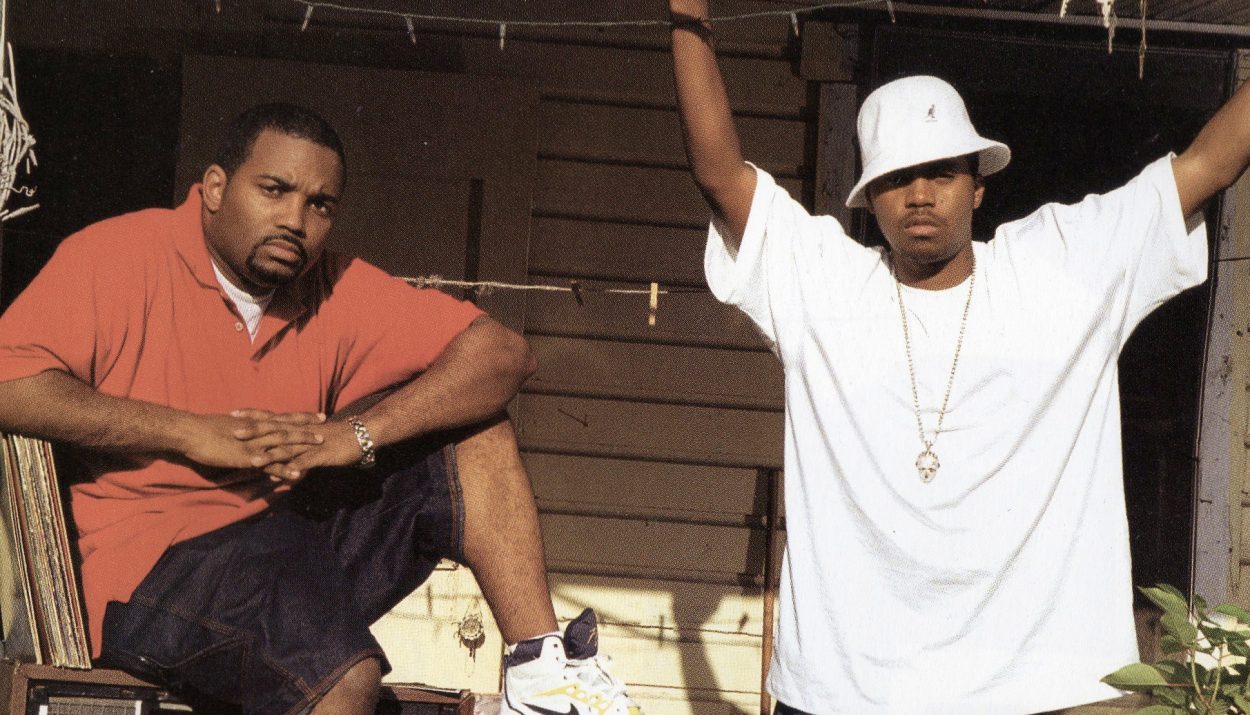
Large Professor, a central figure in the making of Illmatic, says long-running criticism of Nas’ beat selection overlooks a broader point about how the Queensbridge artist constructs records.
Long after Illmatic cemented Nas as one of hip-hop’s most respected lyricists, a recurring critique has followed his career: that his ear for beats has not always matched his writing. Large Professor, who helped shape Nas’s earliest recordings, says that framing simplifies how the rapper approaches music.
According to the producer, Nas does not separate verses from production in the same way critics often do. Instead, he builds records as complete pieces.
“It ain’t even about a beat,” Large Professor said during a [previously unreleased] interview with DJ Vlad. “It’s about a song, a composition.”
The perspective comes from someone closely involved in Nas’s formative period. Large Professor, raised in Queens after being born in Harlem, worked with the rapper before his debut and contributed to early sessions that led to Illmatic. He produced “Halftime” and helped create the environment that later brought in figures such as Q-Tip, Pete Rock and DJ Premier, forming the album’s multi-producer structure.
“We was aiming high from the start,” he said. “We knew what it was.”
That foundation makes the ongoing debate around Nas’s catalog more complex, he added. While some listeners focus on whether individual beats meet expectations, Large Professor said the records themselves often resonate regardless.
“People say they don’t love the beat, but they love the song,” he said. “That’s the whole thing.” He also suggested that Nas intentionally avoids the most obvious production choices, treating his catalog as a creative challenge rather than a search for the safest or most immediately appealing sound.
“He wants to challenge himself,” Large Professor said. “It’s like, ‘I could pick the hottest beats,’ but that would be too easy.”
The approach, he said, is partly rooted in Nas’s musical background, including the influence of his father, jazz musician Olu Dara, which contributes to how he hears and structures records. “Nas got that musical history,” he said. “That’s why certain records feel different.”
For Large Professor, the debate ultimately misses the point if it isolates production from the finished track. In his view, Nas’s longevity is tied to how those elements come together.
“At the end of the day,” he said, “it’s the whole composition.”