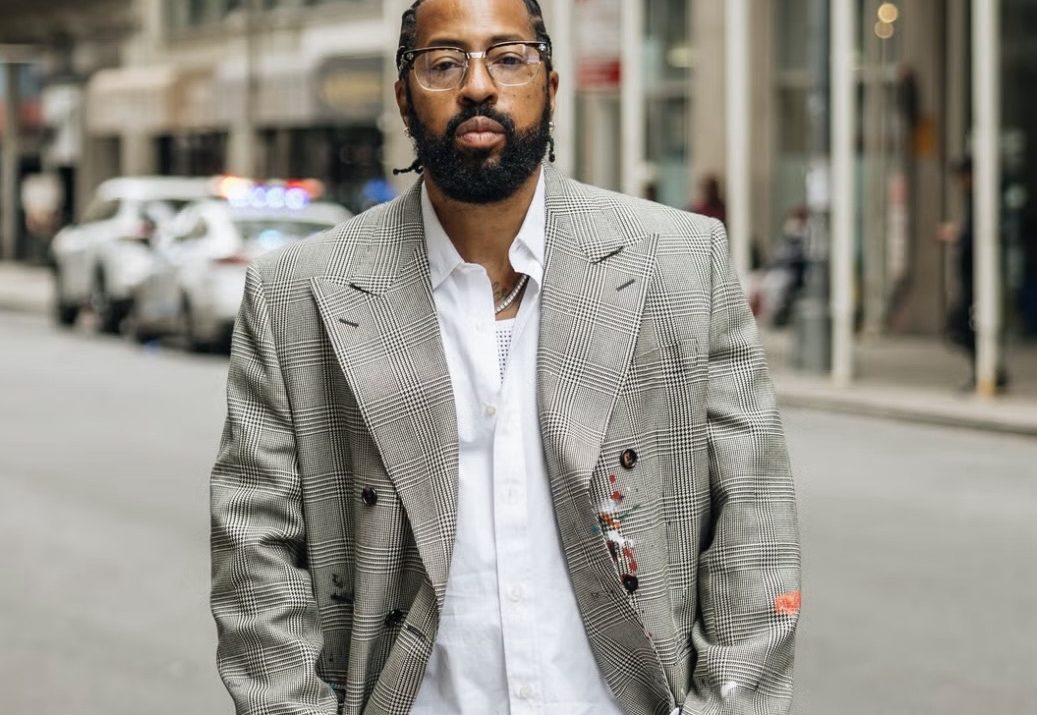
Roc Marciano isn’t interested in nostalgia. With 656, the Long Island lyricist returned to full self-production for the first time in roughly a decade — not to revisit the past, but to reestablish authorship.
“I just wanted to press a reset button,” Marciano said during his sit-down on Hot 97 Mornings with Mero. “Let me take it back from the start with this one.”
Though widely praised for his pen, Marciano has long argued that his production work is just as foundational to his legacy. Over the years, the drum-light, cinematic aesthetic now common in underground rap has been frequently linked to his early solo catalog.
“How can I be the godfather of a sound, but y’all not talking about my sound?” he said. “I came with a sound.”
656 began taking shape with “Childish Things,” the first record he created for the project. Once the beat was complete, he knew he had direction. “When I made the beat, I was like, ‘Oh yeah, this going on the next joint.’”
By the time the album was finished, Marciano felt it carried the full spectrum he intended. “I got every color on here that I wanted.”
Beyond the music itself, Marciano spoke about what he views as a larger movement that formed around his approach. “My music started an ecosystem,” he said. “You can’t just take the blueprint without the talent.”
That ecosystem extends beyond sound into business. When the traditional label system contracted in the late 2000s, Marciano pivoted early to direct-to-consumer releases, selling music independently through his own platform. The strategy allowed him to bypass major-label structures and cultivate a dedicated audience willing to support premium releases.
“Necessity is the mother of invention,” he said. “We better cut out the middleman and learn how to get straight to the consumer.”At 48, Marciano also addressed hip-hop’s tendency to sideline artists as they age — a practice he believes is applied unevenly.
“They only do that with Black artists,” he said, referring to ageism within the genre. “The young guys, they naive. You could get that dude in a bad deal. A grown man? You gotta pay this dude.”
For Marciano, longevity is less about reinvention and more about refinement. He records primarily from his home studio, working on his own schedule and equipment, often preferring early mornings for clarity.
“Your judgment is fresh,” he said. “You can hear it clear.” Still, he doesn’t dismiss the next generation’s experimentation. In fact, he welcomes it — as long as it’s authentic. “That would be wack if they was all trying to do what we doing,” he said. “Be true to you.”
With 656, Roc Marciano isn’t chasing trends or reintroducing himself. He’s reinforcing ownership — of his sound, his business model and the ecosystem that grew from both.